




Featured articles
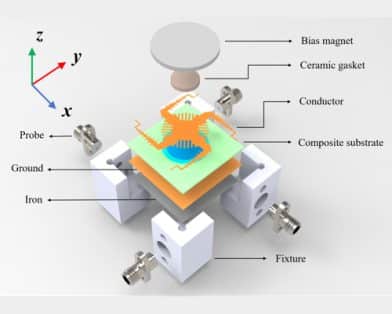
The Wideband Operation of Miniaturized Four-Port Single-Junction Microstrip Circulator
 Volume: 74, Issue: 3, March 2026
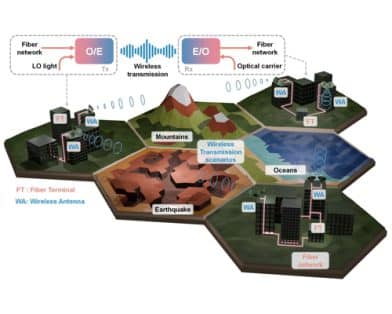
Demonstration of Transparent Polarization-Division Multiplexed Fiber–Radio–Fiber Bridge at W-Band Based on Direct Full-Photonic Conversions
Volume: 74, Issue: 3, March 2026
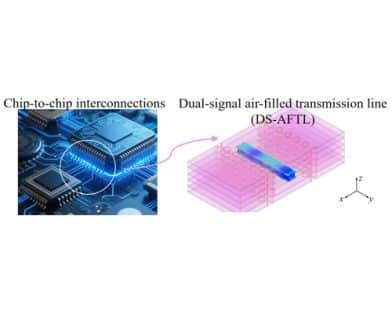
A Low-Loss and Ultrawideband Dual-Signal Air-Filled Transmission Line for Terahertz Applications
Volume: 74, Issue: 3, March 2026
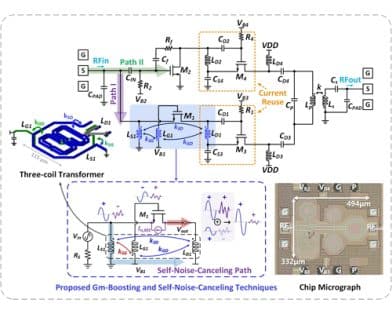
A 20–25 GHz Transformer-Based Improved Multipath Noise-Canceling LNA With 2 dB Minimum NF in 40-nm CMOS
Volume: 74, Issue: 3, March 2026
About the journal
The IEEE Transactions on Microwave Theory and Techniques (T-MTT) is the preeminent publication concerning RF and microwave technology. It focuses on that part of engineering and theory associated with microwave/millimeter-wave components, devices, circuits, and systems involving the generation, modulation, demodulation, control, transmission, and detection of microwave signals. This includes scientific, technical, and industrial activities. Microwave theory and techniques relates to electromagnetic waves usually in the frequency region between a few MHz and a THz; other spectral regions and wave types are included within the scope of the Society whenever basic microwave theory and techniques can yield useful results. Generally, this occurs in the theory of wave propagation in structures with dimensions comparable to a wavelength, and in the related techniques for analysis and design.
The Impact Factor of T-MTT is 4.5 in 2024 and the acceptance rate is 26.1%. The average time from submission to first decision is 24.3 days and the average time from submission to final decision is 34.5 days.
Electronic Access is Available to digital subscribers through IEEE Xplore.
Current issue
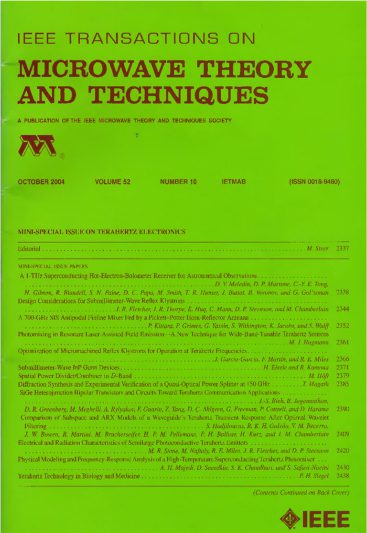
March 2026 Issue
Special Issue on Power Amplifiers for Communications and Satellite Applications
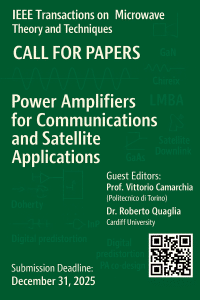 The design and implementation of power amplifiers (PAs) remain a cornerstone of RF and microwave transmitters, enabling energy efficient transmission of signals across wireless and satellite communication systems. The demand for high-performance, energy-efficient, and broadband PAs continues to grow with the evolution of 5G/6G cellular networks, satellite constellations, non-terrestrial networks, and emerging frequency bands up to millimeter-wave.
In 2026, the RF/microwave community will celebrate the 90th anniversary of the Doherty Power Amplifier and the 10th anniversary of the Load Modulated Balanced Amplifier (LMBA). These milestones mark a crucial moment to assess recent developments and future directions in high-efficiency amplification. This Special Issue aims to feature cutting-edge research on advanced PA architectures, enabling technologies, and system-level innovations for high-efficiency, linear, and broadband power amplification in both terrestrial and spaceborne communication systems.
The submission is accomplished through IEEE Author Portal website (https://ieee.atyponrex.com/submission/), in exactly the same way as any other regular MTT Transactions’ submission. When you prepare your manuscript, you should consult the Instructions for Authors (https://mtt.org/publications/t-mtt/information-for-authors/) and follow the T-MTT Word or LaTex Templates available there. Papers not following these templates cannot be accepted into the peer review process.
Special Issue on From Fields and Waves to Photonic Integration: Emerging Directions in Electromagnetic Research
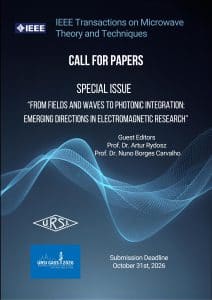 The special issue From Fields and Waves to Photonic Integration: Emerging Directions in Electromagnetic Research aims to present a unified vision of contemporary advancements in electromagnetics—from fundamental studies of fields and waves to state-of-the-art modeling and characterization techniques, and to innovative solutions in communication, sensing, and integrated photonics. By bringing together the perspectives of URSI Commissions A, B, C, and D, this issue highlights the convergence of classical and emerging approaches that collectively shape the future of science- and industry-driven technologies. Its goal is to inspire cross-disciplinary dialogue, showcase recent breakthroughs, and outline promising directions for further research in electromagnetics and photonics.
Scope: We invite original research contributions and high-quality review articles covering, but not limited to, the following topics. The submission should clearly articulate its relevance to the appropriate URSI Commissions and should reference related presentations delivered at URSI GAAS 2026
The submission is accomplished through IEEE Author Portal website (https://ieee.atyponrex.com/submission/), in exactly the same way as any other regular MTT Transactions’ submission. When you prepare your manuscript, you should consult the Instructions for Authors (https://mtt.org/publications/t-mtt/information-for-authors/) and follow the T-MTT Word or LaTex Templates available there. Papers not following these templates cannot be accepted into the peer review process.
Special Issue on Quantum-Enhanced Microwave Technologies and Systems
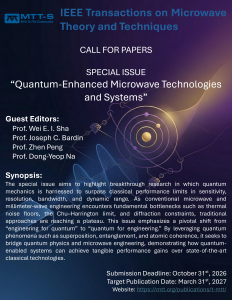 The special issue Quantum-Enhanced Microwave Technologies and Systems aims to highlight breakthrough research where quantum mechanics is leveraged to break classical performance limits in sensitivity, resolution, bandwidth, and dynamic range. As traditional microwave and millimeter-wave engineering face critical bottlenecks—such as thermal noise floors, the Chu-Harrington limit, and diffraction boundaries—conventional approaches are reaching a plateau. This issue focuses on the critical transition from “engineering for quantum” to “quantum for engineering”. By exploiting quantum phenomena like superposition, entanglement, and atomic coherence as functional resources, this issue seeks to bridge the gap between quantum physics and microwave engineering, showcasing how quantum-enabled devices can deliver tangible advantages over state-of-the-art classical counterparts.
Scope: We invite contributions that demonstrate rigorous theoretical foundations backed by experimental validation or high-fidelity modeling, targeting critical microwave and millimeter-wave applications. Prospective authors are encouraged to submit original contributions in the following areas, with a specific focus on engineering breakthroughs and system-level performance.
The submission is accomplished through IEEE Author Portal website (https://ieee.atyponrex.com/submission/), in exactly the same way as any other regular MTT Transactions’ submission. When you prepare your manuscript, you should consult the Instructions for Authors (https://mtt.org/publications/t-mtt/information-for-authors/) and follow the T-MTT Word or LaTex Templates available there. Papers not following these templates cannot be accepted into the peer review process.
Conference Special Issues of T-MTT
The IEEE Transactions on Microwave Theory and Techniques (T-MTT) regularly publishes Special Issues based on expanded versions of papers from major conferences. The current conference-related Special Issues are listed below:
- Special Issue on 2025 Microwaves, Antennas, and Propagation Conference, Read More
- Special Issue on 2025 Asia-Pacific Microwave Conference, Read More
- Special Issue on 2026 IEEE International MTT Symposia (IMS): RFTT and RFSA, Read More
- Special Issue on 2026 IEEE International Phased Array Symposium (Array2026), Read More
- Special Issue on 2026 IEEE International Microwave Filter Workshop (IMFW), Read More
- Special Issue on 2026 IEEE International Workshop on Integrated Nonlinear Microwave and Millimetre-wave Circuits (INMMiC), Read More
- Special Issue on 2026 IEEE Wireless and Microwave Technology Conference (WAMICON 2026), Read More