




nanoVNA and RF Test Demo Board Kits for all MTT-S and AP-S Chapters


The MTT-S and AP-S started in 2024 a new joint initiative to provide more tangible support to all MTT-S, AP-S, joint MTT-S/AP-S, and their Student-Branch Chapters (hereafter, “Chapters”) worldwide, with educational materials to support students and young professionals in their career development, as well as to inspire greater interest and opportunity for hands-on learning in the areas of RF, microwave, and antenna engineering.
This initiative consists of financial support (via reimbursement) for all Chapters in good standing to acquire one or more low-cost portable “nanoVNAs”, which are open-source, handheld, touchscreen, 2-port vector network analyzers available in different configurations and for various frequency ranges (e.g. 10 kHz to 1.5 GHz). This support will also include the acquisition of low-cost RF test demo boards that include basic RF components and devices, which may be measured using the nanoVNA (see examples pictured below). The estimated cost of each of these kits (one nanoVNA and one or two RF test kits) should be around US$100.
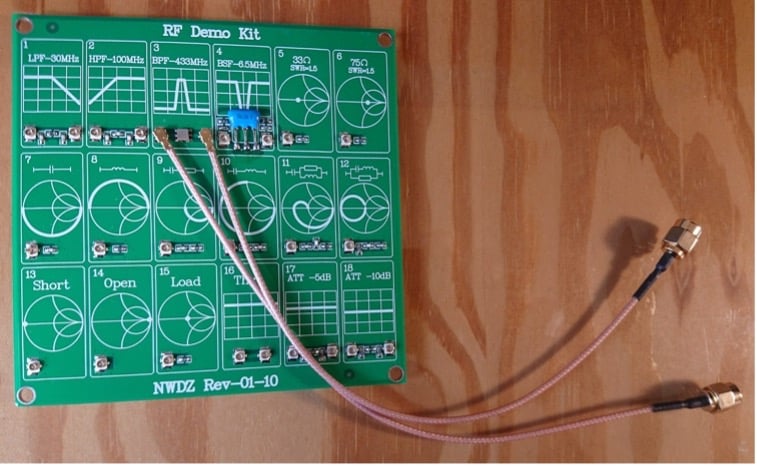
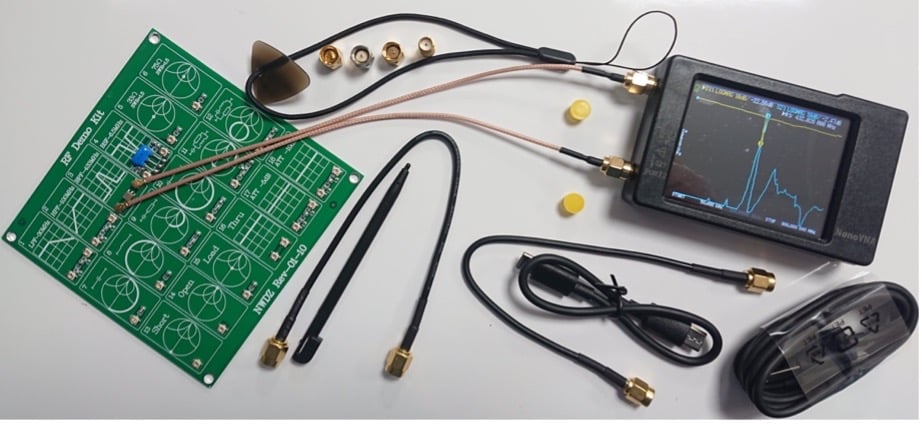
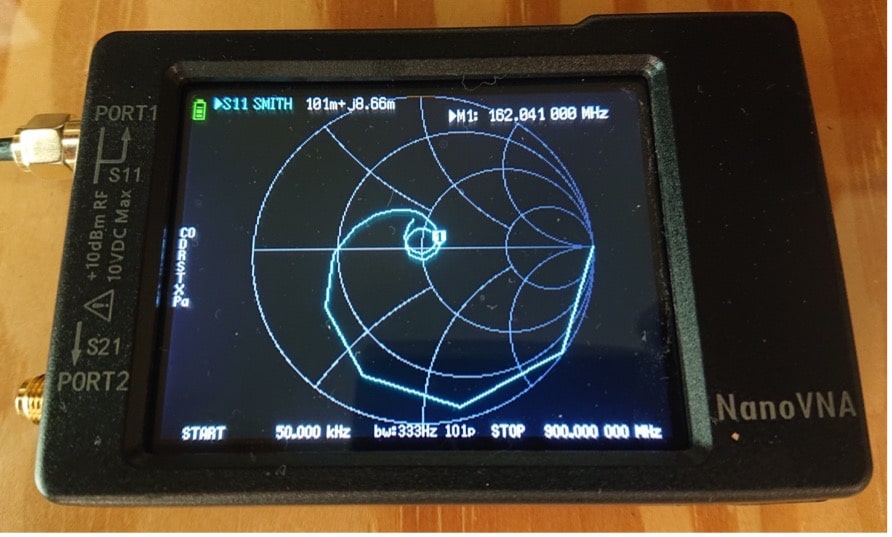
To minimize issues related to shipping and customs permits, Chapters will acquire the kits locally through retailers (such as Amazon.com). MTT-S is not responsible for the acquisition or shipment. The total funding in 2026 is limited. After 2026, the program may be renewed but there is no decision yet. The 2026 reimbursement is subject to the availability of the funds.
There will be two-step procedure for requesting financial support to cover the cost:
- Chapter Officers may request reimbursement for the purchase of the kit at the following Link (around US$100 each, quotation or invoice required).
- Once approved, a code will be given to the applicants, who will seek reimbursement from MTT-S following the instructions in the corresponding approval email message. The applicants then file an expense report reimbursement for the purchase through IEEE Concur system. The applicant is encouraged to obtain a Concur account before applying for the kit.
A report (a template is provided in the application link ) about the kit uses within the chapter is required by Dec. 31, 2026. For questions, please contact Dr. Ricardo Figueiredo ricardofigueiredo@ua.pt.
Projects using Nano-VNAs
- Cost-effective testing techniques to characterize UHF antennas (Casey Bryant, M.Eng)
Engineers require the ability to measure and characterize the reflection coefficient, gain and patterns of unknown antennas. Due to the cost of antenna measurement facilities and the associated equipment, many tertiary educational institutes do not have these facilities available. The purpose of this research was to investigate the use of a sports field as a testing range with cost-effective equipment. Measurements were conducted at two commercial ranges and a sports field. The first range was an open area test site (OATS) where a cost-effective Nano-VNA was compared to a commercial VNA. The antennas under test were two identical log-periodic dipole arrays with a frequency range from 180 MHz – 3 GHz. Altair FEKO was used to model the antenna and compare results from different ground plane responses. An anechoic chamber was used to make baseline measurements which were then compared to the FEKO simulation, OATS and sports field measurements. The sports field results had close correlation with the anechoic chamber and OATS measurements. The study finds that by using the two antenna method, an antenna can be cost-effectively and reasonably accurately characterized for boresight gain to within 1.7 dB on a sports field. The radiation pattern was also achieved on the sports field to within 3 dB of an anechoic chamber measurement. The results enable students and engineers to take antenna measurements at tertiary institutions.
References:
- Master thesis: https://etd.cput.ac.za/handle/20.500.11838/3696
- Journal article: https://ieeexplore.ieee.org/abstract/document/10214186