




Contact
 Send a message
Defence Research and Development Canada
3701 Carling Ave, Ottawa, ON, K1A 0K2, Canada
Electrical and Computer Engineering Department, University of Waterloo, Waterloo, ON, Canada
Status
- dml, TC-4 MICROWAVE PASSIVE COMPONENTS AND TRANSMISSION LINE STRUCTURES, Technical Committees**
- dml, TC-5 FILTERS, Technical Committees**
- Member, TC-5 FILTERS, Technical Committees**
Biography
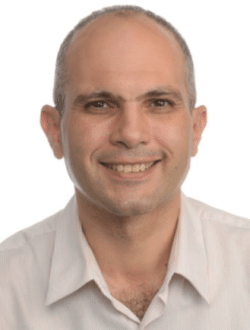
Mohamed M. Fahmi (S’05–M’09-SM’23) received B.Sc. (with Honors) in Electronics Engineering from Mansoura University, Egypt in 1999. The MS degree in Electrical Engineering from Howard University, Washington DC, USA in 2003, and the Ph.D. degree in Electrical Engineering from the University of Maryland, College Park, USA in 2007. He worked as a post-doctoral researcher at the department of Electrical and Computer Engineering at the University of Maryland from January to July 2008, and as a post-doctoral fellow at the department of Electrical and Computer Engineering at the University of Waterloo, Canada from September 2008 to January 2012. He worked as a microwave Engineer, Senior Microwave Engineer and as a Manager of Passive Component Engineering at Nanowave Technologies Inc. in Etobicoke, Canada from February 2012 to February 2017. He worked as a Senior System Engineer, Radar Specialist at General Dynamics Mission Systems Canada, in Ottawa, Canada from February 2017 to February 2018. In February 2018 he joined Defence Research and Development Canada as a Group Leader, Radar Technology and Engineering. Dr. Fahmi is an adjunct Associate Professor at department of Electrical and Computer Engineering at the University of Waterloo, Canada. His current research interests include CAD of microwave devices and systems.
Presentations
Multi-Functional Filtering Components for High Power Applications
In this talk we will discuss all aspects of the design of multi-functional filtering components for high power applications. We will discuss the importance of embedding filtering functions within other passive microwave components employed in high power systems such as radial power combiners, or coupler-based power combiners. These include Gysel couplers, and couplers that have quadrature or rat-race characteristics. Multi-functional filtering components have attracted a lot of attention due to their promising potential. The integration of several functions within a single device is an ascending trend addressing the Size, Weight, and Power, (SWaP) paradigm. Such designs simplify system architecture and reduce component count. This, in turn, has very practical advantages ranging from simplifying assembly, streamlining quality control, eliminating phase and amplitude imbalance as well as reducing component variations. All this translate into shortening the production cycle and reducing production costs. Many advanced designs have been reported in the last decade on combiners with filtering characteristics, covering both theoretical synthesis and practical technological realization. We will start by discussing different classical types of combiners, such as radial combiners, travelling wave combiners, and corporate combiners. We will then discuss the subject of high-power filters. Next, we will discuss how to integrate different filtering functions within the different types of power combiners. Accurate EM modeling of the components will be also discussed. We will then discuss how to use coupled resonator networks to realize a variety of forward, backward, in-phase, quadrature and rat-race filtering couplers. We will extend this approach to multi-way multi-section filtering couplers based on lattices of coupled resonators. Throughout this discussion we will examine available synthesis methodologies, and trade-offs in terms of the available technological realizations of different components. Experimental results will be shared for waveguide filtering radial combiners, ridge waveguide-based filtering couplers, and coaxial-resonator based filtering combiners as well.