



Contact
 Send a message
Status
- 2026, Term expires at end of, Adcom Elected Members**
- Associate Editor, J-MMCT Editors, J-MMCT, Publications**
- Chair, Marketing, Branding and Industry Engagement Committee, Standing Committees**
- Elected by MTT-S Members At Large, Adcom Elected Members**
- Liaison -- MarCom, Broadening Participation Committee, Standing Committees**
- Marketing & Communications, Strategic Planning Committee, Standing Committees**
- Member, TC-17 Microwave Materials and Processing Technologies, Technical Committees**
- Multiscale Multiphysics Steering Committee Rep., Co-sponsored Publications, Publications Committee, Standing Committees**
- Region 8, Subcommittee: SIGHT, Broadening Participation Committee, Standing Committees**
- Vice-Chair, TC-1 FIELD THEORY AND COMPUTATIONAL EM, Technical Committees**
- Webpage Marketing, Electronic Information Committee, Standing Committees**
Biography
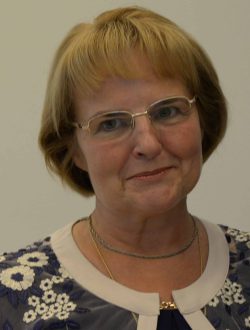
Malgorzata Celuch received M.Sc. (Hons.) and Ph.D. (Hons) degrees from the Warsaw University of Technology (WUT), Poland, in 1988 and 1996, respectively. Until 2017 she held academic positions at WUT’s Institute of Radioelectronics and Multimedia Technology, where she continues to co-supervise doctoral students. In 1996, with a vision to commercialize her research results, she co-founded QWED Sp. z o.o., a high-tech SME. Dr. Celuch led QWED as Vice-President / CTO (1996-2017) and President / CEO (2017-2025). Under her leadership, QWED became a renown vendor of two product lines: simulation software of QuickWave series (electromagnetics and multiphysics) and simulation-driven techniques for microwave material measurements. The products were acclaimed by hundreds of clients of five continents. QuickWave was awarded with the European Information Technology Prize, while recent hardware solutions were recognized on the Europear Horizon Innovation Radar. Dr. Celuch is author of 180+ scientific papers and 7 monograph chapters (h-index 18, 1300+ citations), and recipient of 10+ awards for excellence. She led R&D projects, industrial and co-funded under the European Horizon Frameworks, exploring synergies between computational modeling and materials’ characterization, with recent interest around 5G/mmWave frequencies (EUREKA-Eurostars 5G_Foil) and energy materials (H2020 MMAMA and NanoBat, M-ERA.NET I4Bags). She contributes to several professional organisations (IEEE, EuMA, iNEMI, IMPI, and European Material Modelling Council). Since 2006 she serves as an expert for the European Commission research and innovation programs. In 2025, Dr. Celuch retired from managerial roles and, while remaining with QWED as advisor, she now focuses on mentoring and volunteering activities, mainly via IEEE. She is elected AdCom member of IEEE MTT-S (2024-206), Chair of MarCom and member of other committees (including Publications, Meetings & Symposia, SIGHT). She serves as Associate Editor and Steering Committee member for IEEE JMMCT. She is Vice-Chair of MTT-1 and member of MTT-17.
Presentations
Computational Electromagnetics in a Material World
Computational Electromagnetics (CEM) software has become an indispensable tool in microwave engineering and research. While in many cases a CEM model so faithful to the physical reality that it allows virtual prototyping, in general a CEM-based design can only be as good as the materials’ data fed into the model. However, the worlds of microwave and material technologies traditionally interacted to a very limited extent. This presentation is designed to bring a “material aspect” into the overall picture of the state-of-the-art CEM tools and applications. It is motivated by the authors’ three decades of experience, first, in the development of CEM algorithms during their golden age, and then, in adapting them to the practical needs of microwave materials processing. The authors relevant contributions are presented for, e.g., conformal modeling of boundaries, lossy and temperature-dependent materials, field singularities, and bilateral coupling of EM and thermal processes. This part of the talk is illustrated with domestic oven benchmarks (used for evaluating the accuracy and efficiency of FDTD and FEM software) as well as examples from other technologies (microwave chemistry, asphalt repair, waste recycling). The second part of the talk concerns CEM applications for the enhanced characterization of materials at use conditions. It is illustrated with the measurement techniques for 1-170 GHz frequencies, developed by the author’s company. First, a brief review is provided of popular instruments based on cavities, dielectric split-post and single-post, and Fabry-Perot Open Resonator. Then, most recent research results are highlighted, where the use of CEM is conceptually fundamental. These include 2D scanning scanning setups (for detection of inhomogeneities in electronic and energy materials) and Q-Choked resonators (where the choke removes parasitic modes of a resonator, thereby extending its sensitivity and applicability). The talk finishes with a virtual tour of the author’s laboratories and outlook to the future.