




Contact
 Send a message
Lincoln Laboratory
Massachusetts Institute of Technology,
Lexington, MA
Status
- 2021, Immediate Past Presidents, Ex-Officio Members**
- 2021, Past Presidents, Ex-Officio Members**
- 2026 IMS Co-Chairs, IMS Executive Committee, Standing Committees**
- Chair, Subcommittee: IMS Reorganization Advisory, IMSEC Symposia Executive Committees, IMS Executive Committee, Standing Committees**
- Council Reps/Technical Committee Interface, Vice-Chair, Inter-Society Committee, Standing Committees**
- IEEE Inter-Society Liaison, Inter-Society Committee, Standing Committees**
- Member, TC-24 MICROWAVE/MM-WAVE RADAR, SENSING AND ARRAY SYSTEMS, Technical Committees**
- Member, RFIC Executive Committee, IMS Executive Committee, Standing Committees**
- Member (voting), Awards Committee, Standing Committees**
- Members, Subcommittee: IMS Guidelines Procedures Manual, IMS Executive Committee, Standing Committees**
- Members, RFSA Executive Committee, IMS Executive Committee, Standing Committees**
- Members, RFTT Executive Committee, IMS Executive Committee, Standing Committees**
- Systems, Council Representatives, Inter-Society Committee, Standing Committees**
- Trans. on Radar Systems Steering Committee Rep., Co-sponsored Publications, Publications Committee, Standing Committees**
- Vice Chair, Subcommittee: IMS Rebranding, IMSEC Symposia Executive Committees, IMS Executive Committee, Standing Committees**
Biography
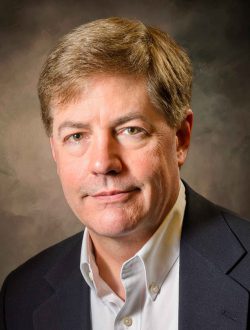
W. Gregory (Greg) Lyons received BS, MS, and PhD degrees in electrical engineering from the University of Illinois at Urbana-Champaign. His MS thesis work involved some of the earliest research on AlGaAs/GaAs high electron mobility transistors (HEMTs). His PhD thesis advisor was John Tucker, who developed the Quantum Theory of Mixing (QTM). Greg’s PhD thesis work at Illinois explored, in part, the application of QTM to other materials systems in collaboration with John Tucker and John Bardeen.
Greg joined Lincoln Laboratory, Massachusetts Institute of Technology (MIT LL) following his PhD work at Illinois. Initially, he developed superwideband RF/microwave components and subsystems, often using novel superconductive and RF photonic technologies. He later moved to designing complete RF/microwave and millimeter-wave (mmw) systems, focusing on the development and field testing of advanced radar, sensing, communications, and electronic warfare (EW) prototype systems for airborne, ground, and space applications. Greg and his team won the best paper award at the 1998 Government Microcircuit Applications Conference (GOMAC).
From 2010-2015 he was an Assistant Group Leader in the Rapid Systems Prototyping Group at MIT LL. This rapid prototyping work covered development and fielding of a wide variety of important RF/microwave and optical systems, including the development and fielding of prototype systems for counter RF improvised explosive device EW (CREW).
Greg is currently a Senior Member of Technical Staff at MIT LL. He has done research and development in high-frequency and high-speed semiconductor devices, condensed matter physics, applied physics, electromagnetics, optical systems, advanced passive microwave filters, phased-array antennas, RF photonic systems, and a wide variety of complete RF/microwave/mmw systems. For the past ten years, he has focused mainly on designing, building, and testing advanced ground-based and airborne radar systems from HF through millimeter-wave, as well as identifying opportunities for advanced technology development and insertion into RF/microwave/mmw systems.
Some favorite quotes from Massachusetts authors for your consideration:
Do not go where the path may lead, go instead where there is no path and leave a trail.
– Ralph Waldo Emerson
The question is not what you look at, but what you see.
– Henry David Thoreau
I’m not afraid of storms, for I’m learning how to sail my ship.
– Louisa May Alcott