




Contact
 Send a message
Luleå University of Technology, Sweden
Status
- 2020-2022, Transactions Past Associate Editors, Transactions on Microwave Theory and Techniques, Publications**
- 2023-2025, Transactions Past Associate Editors, Transactions on Microwave Theory and Techniques, Publications**
- Associate Editor, Letters Editors, Microwave and Wireless Technology Letters, Publications**
- Member, TC-2 DESIGN AUTOMATION, Technical Committees**
- Microwave and Wireless Technology Letters, Publications**
- Speakers bureau, TC-2 DESIGN AUTOMATION, Technical Committees**
Biography
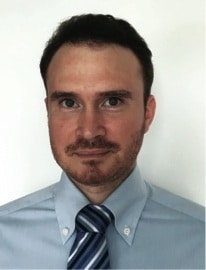
Francesco Ferranti received the Ph.D. degree in Electrical Engineering from Ghent University, Ghent, Belgium, in 2011. He is currently a Full Professor at the Department of Computer Science, Electrical and Space Engineering, Luleå University of Technology, Sweden. He is also an Adjunct Professor at the Indian Institute of Technology (IIT) Madras, Chennai, India.
He is an IEEE Senior Member. He was the recipient of the Anile-ECMI Prize for Mathematics in Industry 2012 and the Electromagnetic Compatibility Society President’s Memorial Award 2012. He was the Program Chair of the IEEE Workshop on Signal and Power Integrity (SPI) 2014 and the Secretary of the International Workshop on Integrated Nonlinear Microwave and Millimetre-wave Circuits (INMMIC) 2014. He has been a member of the Technical Program and Paper Review Committees of the IEEE Workshop on Signal and Power Integrity (SPI), the IEEE International Conference on Numerical Electromagnetic and Multiphysics Modeling and Optimization (NEMO), the International Conference on Synthesis, Modeling, Analysis and Simulation Methods, and Applications to Circuit Design (SMACD) and the IEEE Conference on Electrical Performance of Electronic Packages and Systems (EPEPS). He is a Member and Speaker Bureau of the Technical Committee on Design Automation (MTT-2) of the IEEE Microwave Theory and Techniques (MTT) Society.
His current research interests include machine learning, artificial intelligence, surrogate modeling, model order reduction, behavioral modeling, optimization, uncertainty quantification, microwave design and characterization, metamaterials and metasurfaces, nanophotonic and optical design. He has authored or co-authored more than 160 papers in peer-reviewed journals and conferences, and 3 book chapters. He serves as a regular reviewer for several international journals and conferences.
Presentations
Advanced Data-Driven Modeling Techniques for Microwave and Photonic Design
Electromagnetic solvers are of paramount importance to simulate the behavior of complex microwave and photonic devices and systems, which have many applications in domains as communication, sensing, imaging and computing. However, EM solvers can result very computationally expensive. In a design flow it is needed to carry out design tasks such as optimization and variability analysis, and therefore a high number of EM simulations can be required. The direct use of EM solvers into a design flow then can easily become unfeasible. Advanced data-driven modeling techniques have been proposed for the modeling and design of microwave and photonic devices and systems. Many of these techniques belong to the domain of supervised machine learning. These modeling techniques can be used to tremendously speed-up the design flow while retaining high accuracy in the obtained results. Multiple applications will be presented where different data-driven modeling techniques are used for passive and active devices and can be tailored towards optimization and variability analysis. The importance of data collection will be highlighted, since it is a very important aspect related to the model accuracy and computational cost of the model training and validation.