



 Volume: 36, Issue: 2, February 2026
 Zheyuan Wang
Quadrupole Interaction-Based Detection of OAM Microwaves Using Rydberg Atoms
Abstract
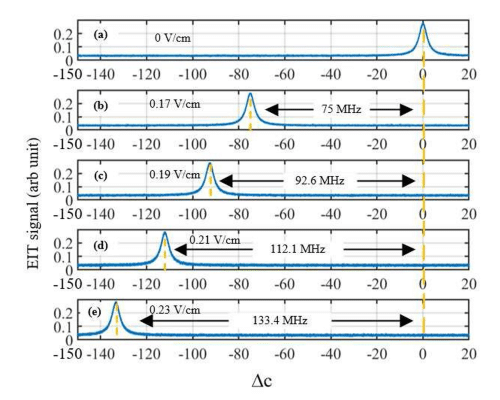
The orbital angular momentum (OAM) technology, promising for future communications, radar, and quantum information processing, confronts challenges in OAM detection of the microwave photons, due to the noise and equipment complexity. Conventional detection approaches based on gyrotron systems, which demand vacuum and high-voltage environments, prove impractical for scalable applications. Thus, we introduce a Rydberg-atom-based architecture for OAM detection of vortex microwave photons, which operates in normal pressure and low voltage with miniaturized equipment. Specifically, leveraging the unique dipole-forbidden, quadrupole-allowed transitions of Rydberg atoms, we can receive the vortex microwave photons and identify the corresponding intrinsic OAM (IOAM), with precise frequency alignment by external electrode plates for fine-tuning. Moreover, experimental observations reveal the insight of Autler–Townes splitting, confirming that the OAM of microwave photons can couple to atomic energy levels through electric-quadrupole interactions, inducing a dynamic Stark effect. In contrast, the experiments with plane microwave photons, i.e., the OAM mode is zero, show the result with only static stark broadening rather than the peak splitting, which highlights the critical role of quadrupole transitions in OAM detection. Significantly, this approach overcomes the limitations of conventional techniques requiring high-energy superconducting devices or high-voltage setups, offering a low-cost, scalable solution for efficient vortex microwave photons detection with promising applications, e.g., secure wireless communications and quantum radars.
DOI: 10.1109/LMWT.2025.3621009 IEEEXplore: https://ieeexplore.ieee.org/document/11222691